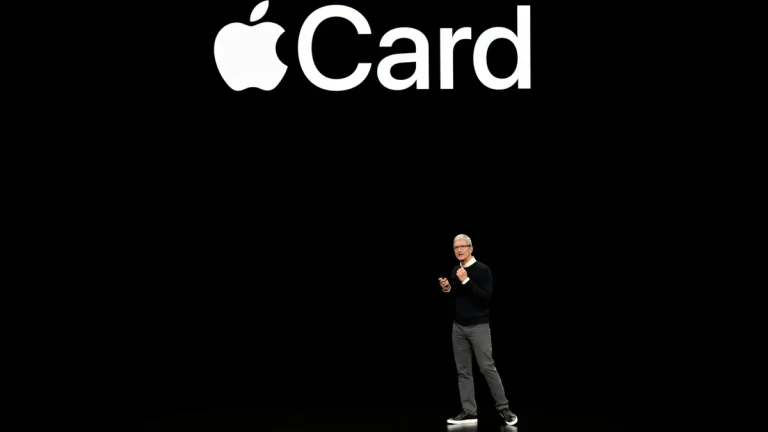
Apple has officially moved its flagship credit card partnership to JPMorgan Chase, marking a major shift in US consumer finance and effectively closing the chapter on Goldman Sachs’s troubled push into mass-market lending.
Under the deal announced in early January, JPMorgan Chase will take over the issuance of the Apple Card, assuming a $20 billion portfolio of Apple cardholders while the card continues to run on Mastercard’s payment network. The transition brings together Apple’s vast ecosystem of iPhone, Apple Watch, and Mac users with the balance-sheet strength and consumer credit expertise of the largest bank in the United States.
How the Apple–JPMorgan Transition Will Work
The migration of Apple Card accounts from Goldman Sachs to JPMorgan will take up to two years, according to the banks’ joint announcement. During this period, Goldman Sachs will continue operating the Apple Card business to ensure service continuity for customers.
JPMorgan also disclosed that it will set aside $2.2 billion in provisions in the fourth quarter of 2025 to cover expected losses tied to the acquired portfolio. While sizable in absolute terms, the Apple Card balances account for just 1.4% of JPMorgan’s total loan book, making the deal financially manageable for the banking giant.
Why Goldman Sachs Is Walking Away
For Goldman Sachs, the move represents a strategic retreat. The firm is reportedly selling the Apple Card portfolio at a discount exceeding $1 billion, according to people familiar with the deal. Analysts say the exit underscores how costly and complex Goldman’s consumer banking experiment became.
Industry observers have been blunt. Some Wall Street analysts described the Apple Card venture as a misstep that diverted resources from Goldman’s traditional strengths in investment banking and institutional finance. Over the past two years, the bank has steadily unwound its consumer footprint, selling its General Motors credit card business, divesting Marcus Invest, and offloading fintech lender GreenSky.
Goldman Sachs CEO David Solomon said the transaction “substantially completes” the firm’s narrowing of focus in consumer finance, signaling a return to its historical core businesses.
Why JPMorgan Wanted the Apple Card
For JPMorgan, the deal offers strategic upside. Analysts note that the bank has deep experience in credit cards, large-scale consumer lending infrastructure, and the technology needed to run a portfolio of this size efficiently.
More importantly, the Apple Card gives JPMorgan access to millions of Apple-centric customers, a demographic prized for higher engagement, digital adoption, and long-term cross-selling potential. With insights into spending behavior across Apple’s ecosystem, JPMorgan can market additional banking, payments, and wealth products to a valuable customer base.
“This is a smart use of excess capital,” analysts have said, noting that the portfolio can generate attractive returns on equity once integrated.
Apple’s Perspective: Continuity and Scale
From Apple’s standpoint, the shift prioritizes stability. While Goldman helped launch the Apple Card in 2019 with promises of transparency, no fees, and tight integration with Apple Wallet, operational challenges and credit losses strained the partnership.
Apple executives welcomed JPMorgan as a long-term partner, emphasizing shared commitments to innovation and customer experience. With JPMorgan’s scale, Apple Card users are expected to see smoother operations, stronger customer support, and greater resilience during economic downturns.
A Turning Point in Consumer Banking Strategy
The Apple–JPMorgan deal highlights a broader lesson in US banking. Scale, credit expertise, and operational discipline matter in consumer finance—areas where JPMorgan excels and where Goldman struggled outside its traditional domain.
As Apple aligns with the country’s largest bank and Goldman retreats to its roots, the transaction reshapes the competitive landscape for co-branded credit cards and signals the end of one of Wall Street’s most ambitious consumer banking experiments.