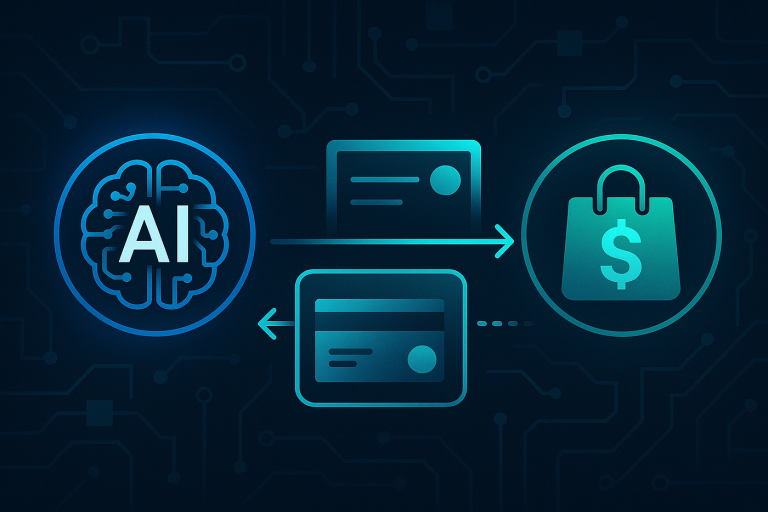
Agentic commerce future payments are rapidly reshaping how people buy, pay, and interact with financial systems. According to FIS executive David Keenan, the traditional plastic card may not survive the next wave of innovation, even as the underlying payment networks continue to evolve.
The idea behind agentic commerce future payments challenges long-held assumptions. While many people see cards as essential tools, Keenan argues they are simply physical interfaces. In contrast, payment networks represent decades of trust, rules, and infrastructure. Therefore, as technology advances, the physical card may disappear, but the systems behind it will remain.
Keenan points out that checks may outlast cards. Although that sounds surprising, his reasoning is clear. A check functions as a complete payment instrument. Meanwhile, a card only provides access to an account. As digital systems improve, the need for a physical card becomes less relevant.
At the same time, agentic commerce future payments are accelerating this shift. Commerce has already moved from physical stores to online platforms. Now, it is moving again toward AI-driven transactions. In this next phase, intelligent agents will handle purchases on behalf of users. As a result, traditional interfaces like cards may become unnecessary.
However, the rise of new technologies has sparked debate about the future of payment networks. Some analysts believe stablecoins and blockchain systems could replace existing infrastructure. Keenan disagrees. He argues that established networks have spent decades building trust and handling complex scenarios such as fraud and disputes. Therefore, they remain highly adaptable.
Even so, agentic commerce future payments will require flexibility. FIS has developed a system called Smart Basket to address this need. This platform allows multiple payment methods within a single transaction. For example, a customer could pay for one item with a credit card and another with a digital asset. Consequently, businesses do not need to choose a single payment method.
Beyond payment methods, agentic commerce future payments introduce a new level of automation. AI agents could soon manage everyday financial decisions. These agents would track spending habits, loyalty points, and available discounts. Then, they would execute purchases based on the best available option.
This approach offers clear advantages. For instance, an AI agent could optimize cash flow by choosing the most efficient payment method. It could also identify savings opportunities in real time. As a result, consumers and businesses may gain better control over their finances.
Nevertheless, agentic commerce future payments raise important concerns, especially in lending. Buy now pay later agreements involve real financial commitments. Allowing an AI system to make such decisions introduces new risks. Trust becomes critical in this context.
Keenan believes existing payment networks can support this trust. These systems already manage complex financial relationships. However, he does not expect full autonomy immediately. Instead, he sees a hybrid model where users guide their AI agents while maintaining oversight of major decisions.
Meanwhile, agentic commerce future payments are forcing retailers to rethink their strategies. Keenan advises businesses to separate their payment orchestration systems from their acquiring partners. In the past, companies often relied on a single provider for their entire payment stack. However, this approach limits flexibility.
By adopting a more modular system, retailers can respond to rapid changes in the market. They can integrate new payment methods, support AI-driven transactions, and adapt to evolving consumer behavior. Therefore, flexibility becomes a key competitive advantage.
In addition, agentic commerce future payments extend beyond consumers. Brands will also deploy AI agents to interact with buyers. For example, a product manufacturer could offer real-time discounts based on purchasing conditions. These interactions could happen instantly within a single transaction.
This shift transforms the entire marketplace. Instead of static pricing and fixed payment methods, transactions become dynamic and personalized. As a result, businesses can engage customers in more meaningful ways.
However, the transition will not happen overnight. Companies must invest in infrastructure and rethink existing systems. Those that act early will gain an advantage. On the other hand, those that delay may struggle to keep up.
Ultimately, agentic commerce future payments represent a fundamental change in how commerce operates. The decline of physical cards signals a broader transformation. Payments are becoming more intelligent, automated, and integrated into everyday life.
As this evolution continues, one thing remains clear. The future of payments will not depend on physical tools. Instead, it will rely on adaptable systems that can support innovation and maintain trust in a rapidly changing digital economy.